Case study
Qwally
From a paper process in one city to a platform for many
My role: Solo product designer and front-end developer, through my studio flow14, 2019–2021
Worked with: Qwally’s founders and CTO
Constraints: No in-person UX or research budget on my side, and city, state, and federal requirements to untangle
The Beginning · February 2019
Qwally—building software to help small businesses work with local governments—was preparing for a kickoff with their first client, the Office of Supplier Diversity in Mobile, Alabama.
They had defined user needs, personas, and sketches of flows for a checklist and certification questions, but didn’t know where to go next.
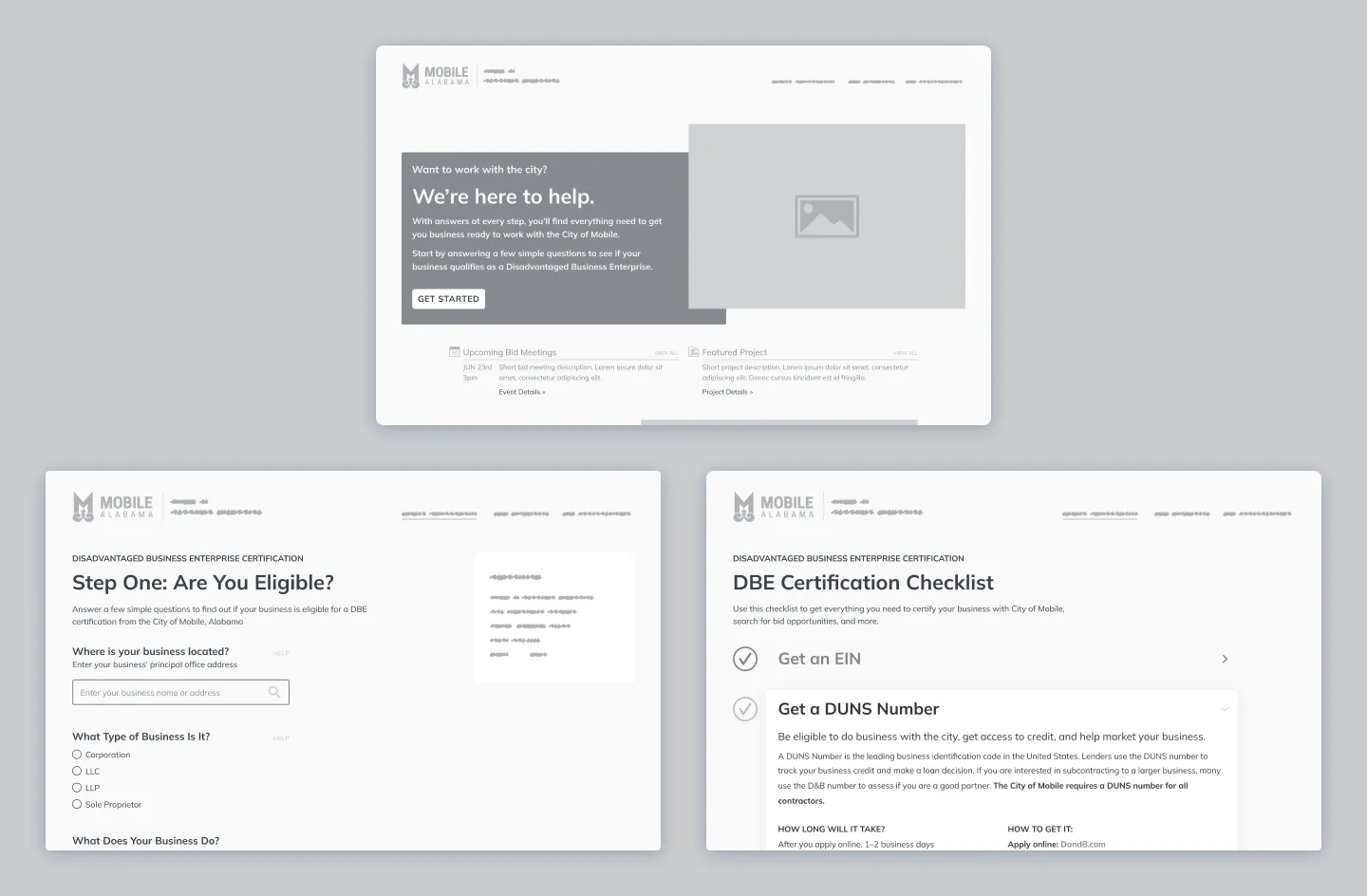
I defined a phase 1 plan that included IA, user journeys, and wireframes, and advised the team on how to present concepts and run workshops with city officials.
“We aim to develop a better way for local governments to work with small businesses in their community. We are seeking a freelance UX designer to help us define an information architecture and user journey to help small business owners navigate the complexities of government contracting.”
“Our findings so far indicate that access to timely information is one of the most significant barriers to small business participation in government contracting.”
“A homerun would be us collaboratively developing an intuitive, human-centered, and refined product to launch that delights our existing government customers to the point where they are happy to not only enter into a longer-term contract with us, but also refer our product to other local governments.”
Making research runnable
The budget didn’t include in-person UX or research activities, so I made it easy for Qwally to run its own.
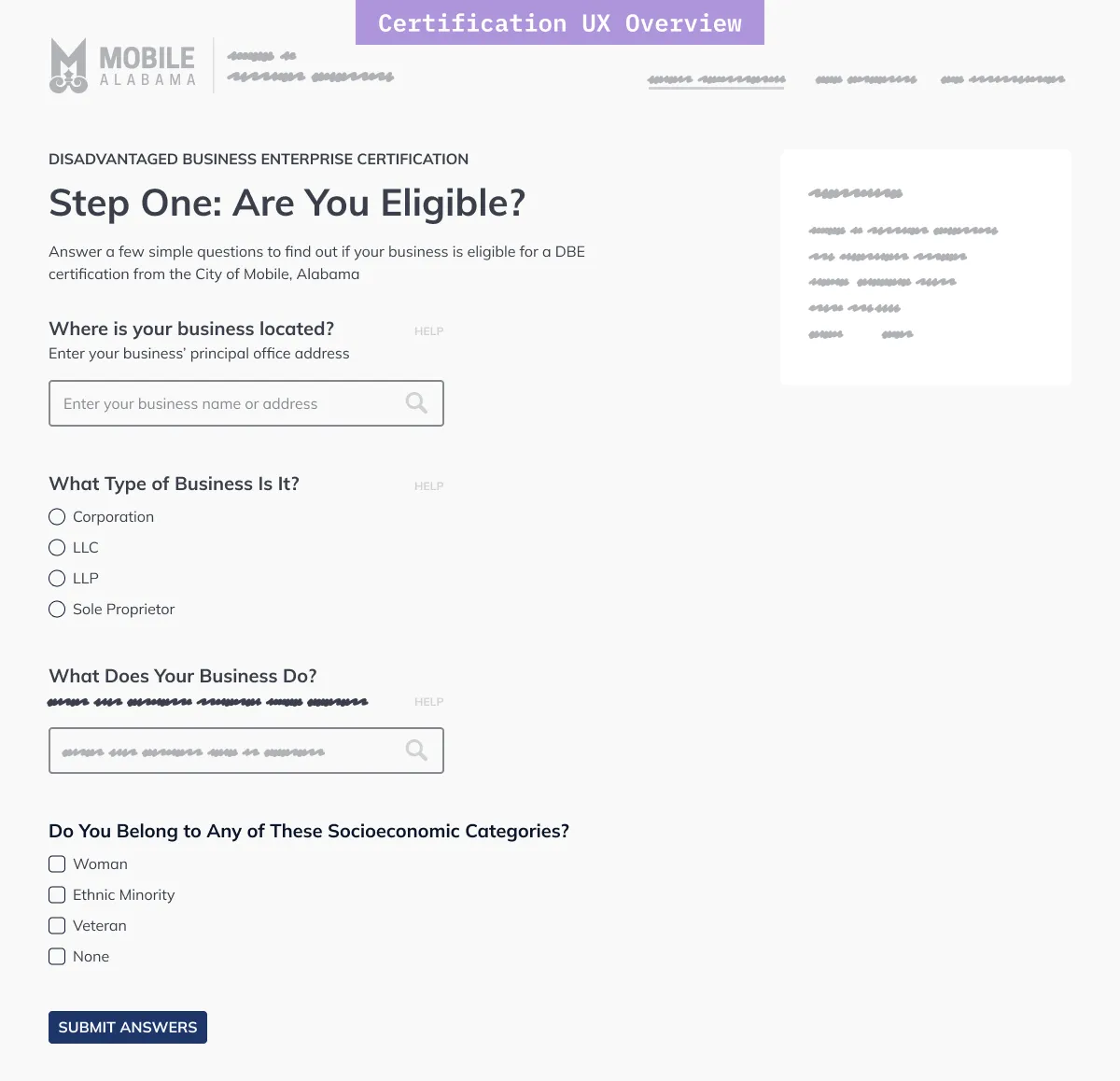
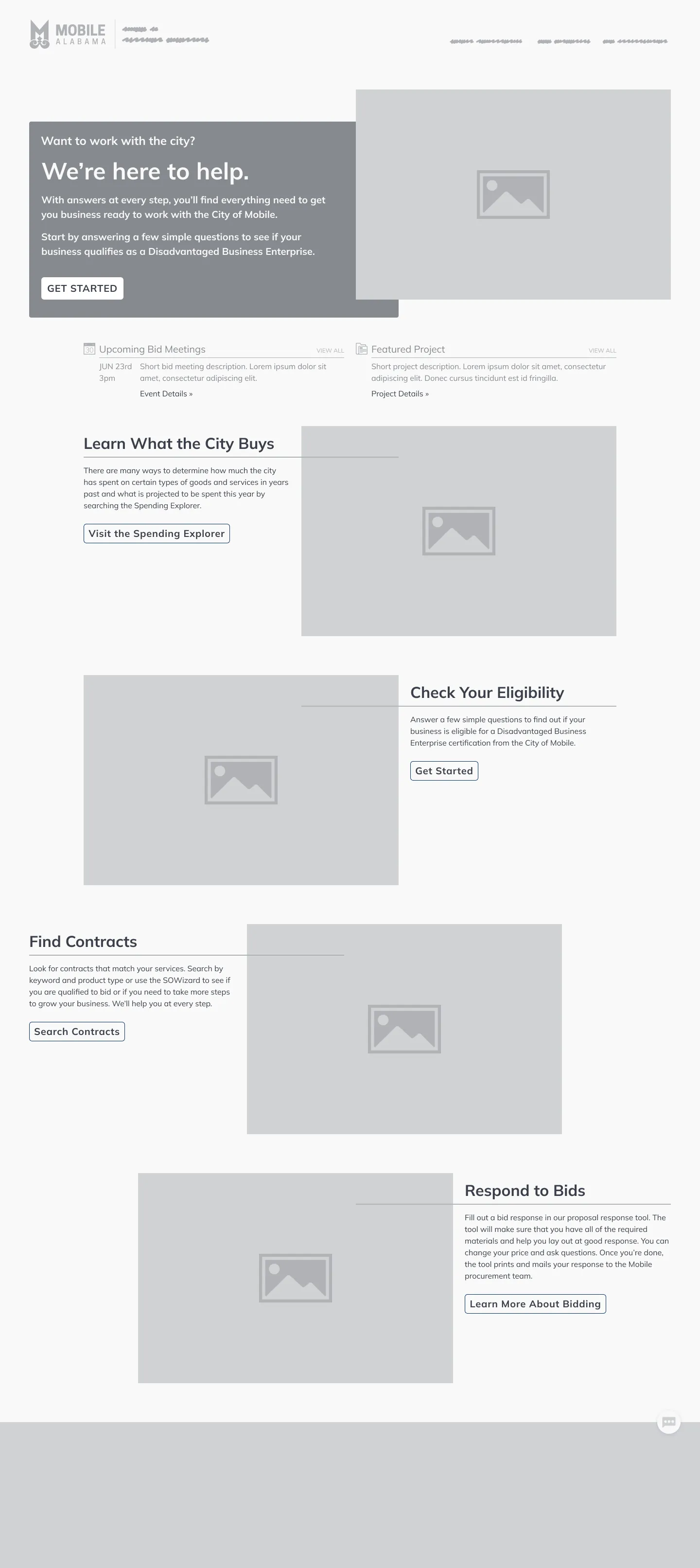
I designed wireframes for the homepage, checklist, and certification questions, and coached the founders on UX activities like task flow analysis and user research methods.
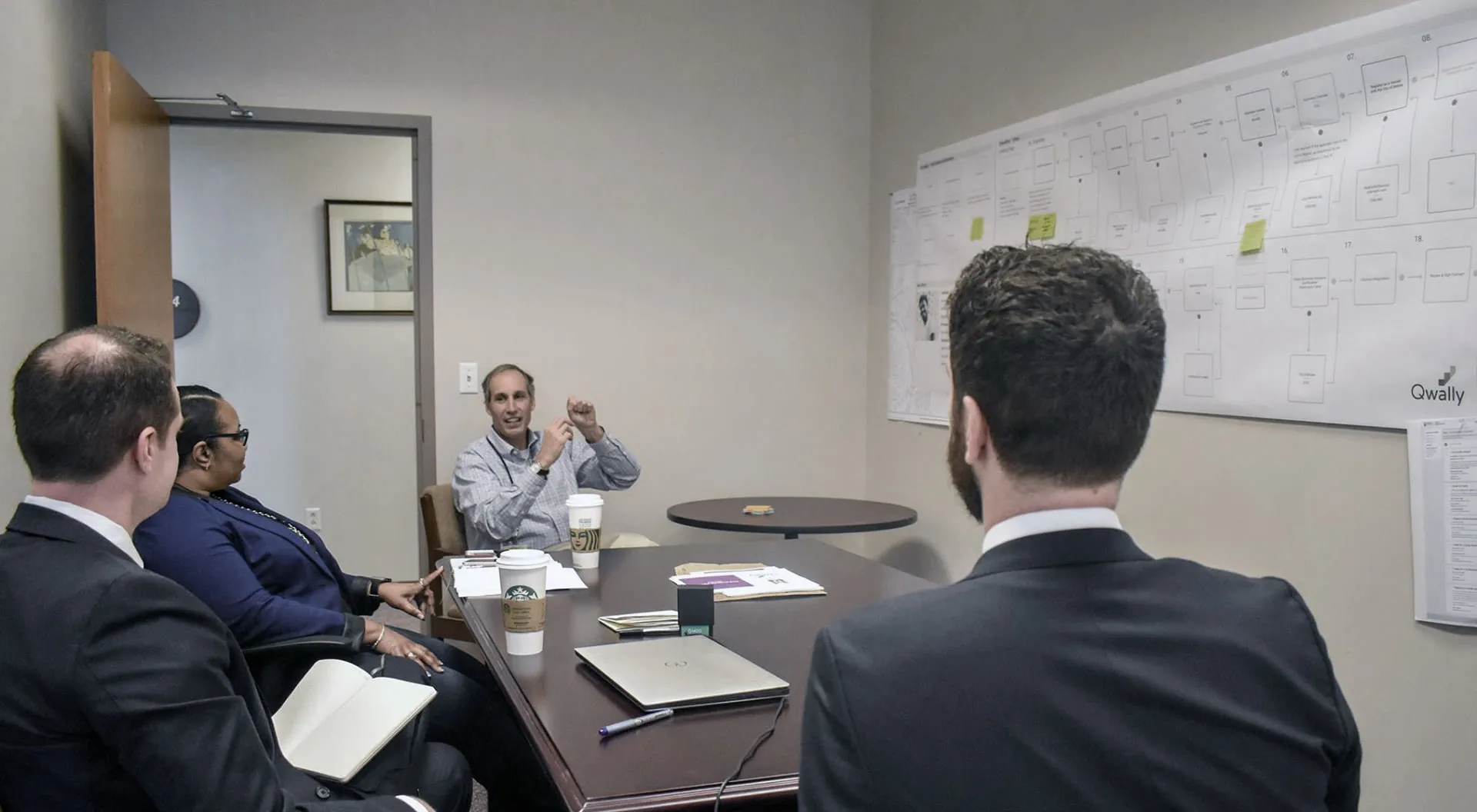
For the task flow analysis, I created an oversized print that Qwally could use in meetings with Mobile’s city officials and mark up together.
Qwally’s team then spent 16 weeks in Mobile, ran three cycles of user research, and fed what they learned back into their plans.
Task flow analysis
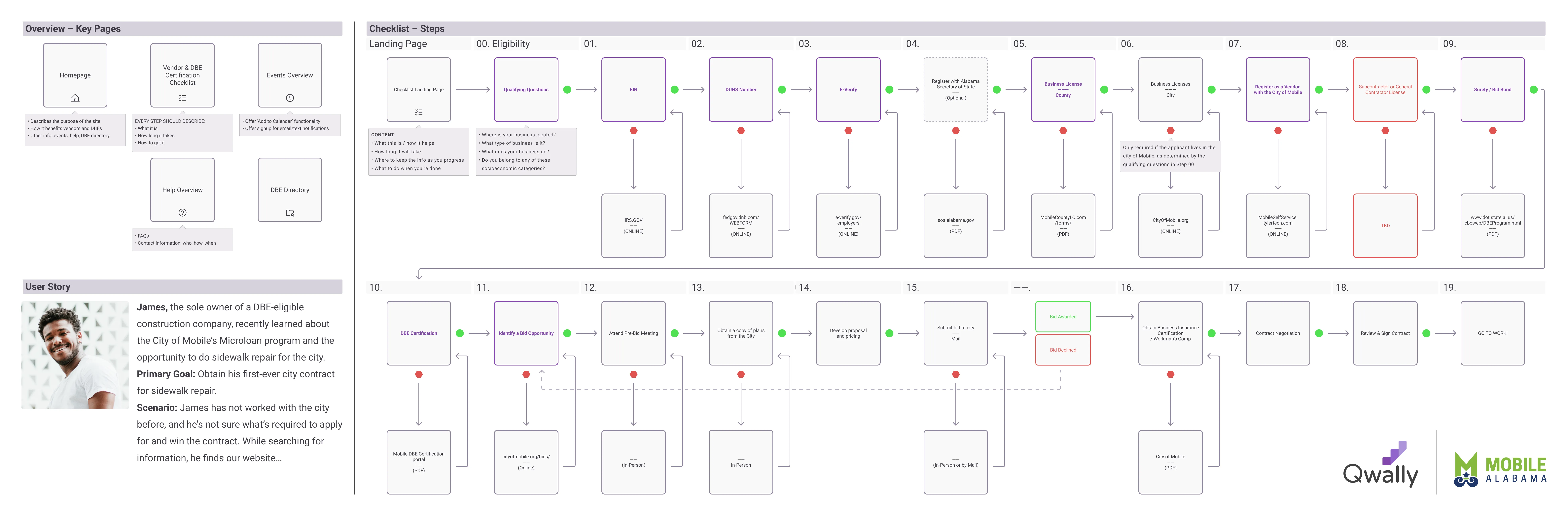
Nearly 20 complex steps from certification to a signed contract.
The insight
The research findings suggested Qwally was on the right path. People responded well to the checklist concept and certification questions, but the process still felt complex and intimidating.
The opportunity
Qwally’s CTO, who had been watching the research, proposed turning the certification questions into an onboarding flow that builds a custom checklist for each user.
My challenge
Design that flow question by question, so it’s easy to find and finish, accessible to everyone, and flexible enough to grow with Qwally.
The Solution
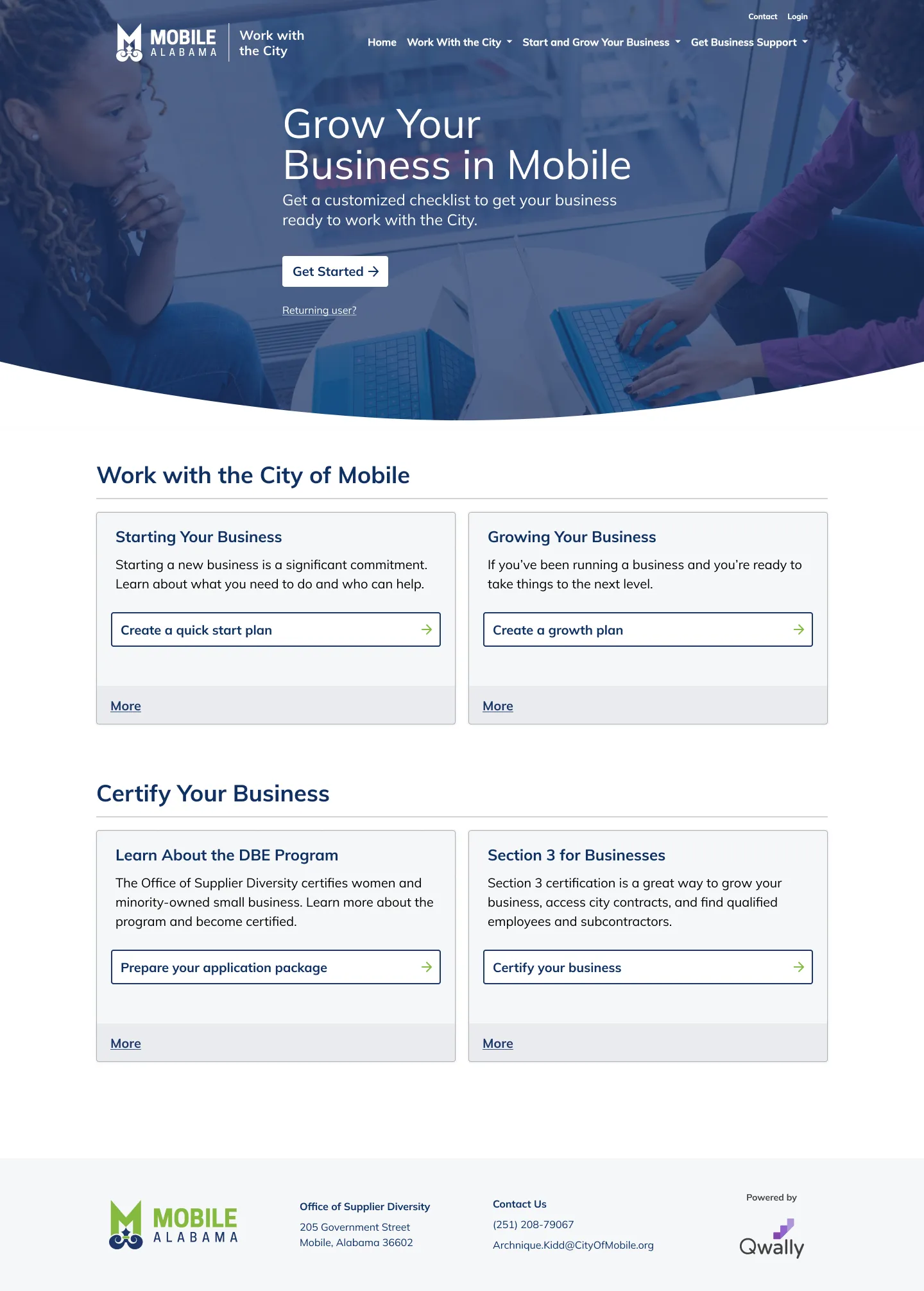
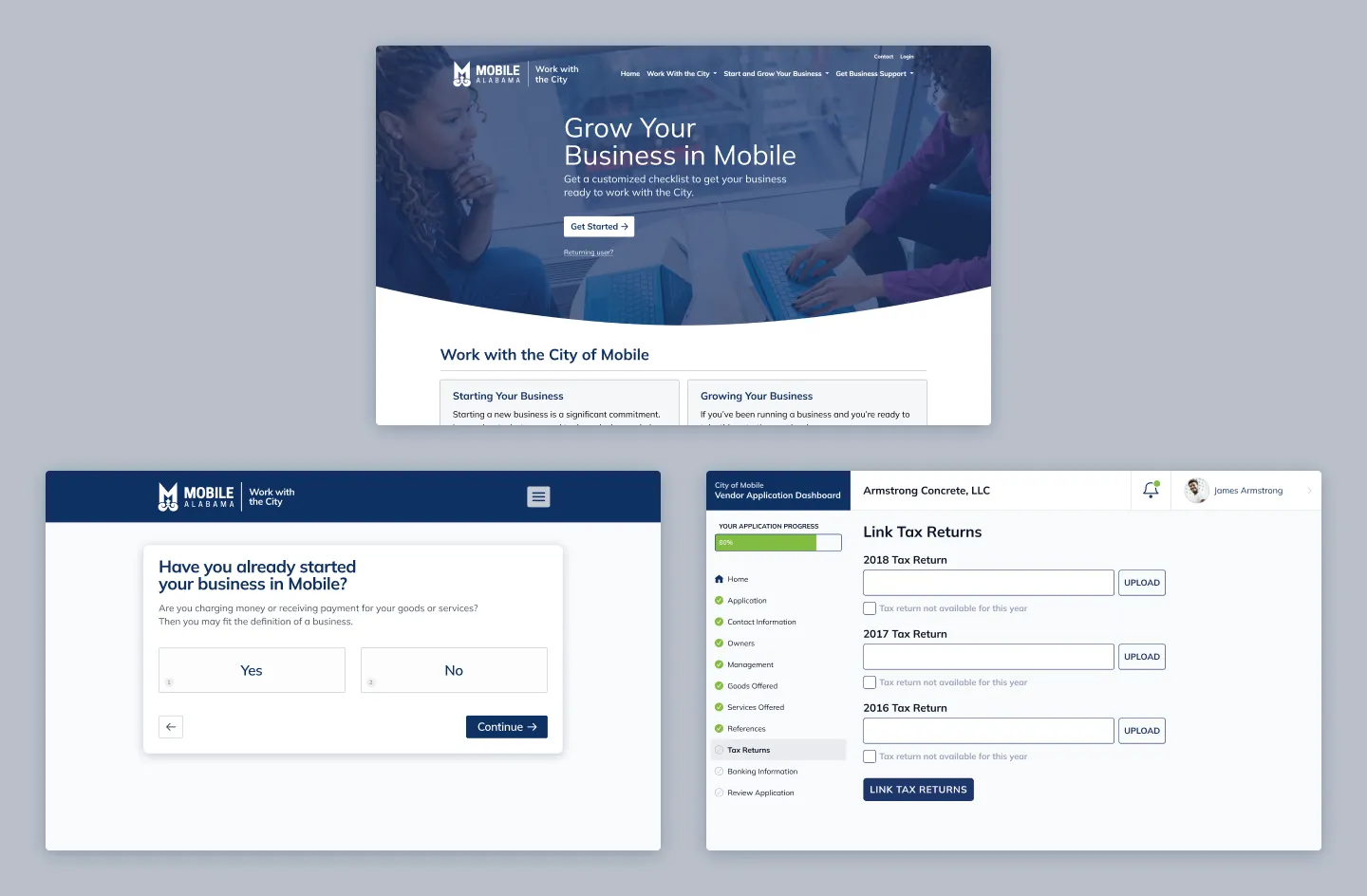
I scrapped the first homepage design and replaced it with one featuring a clearer message and CTA.
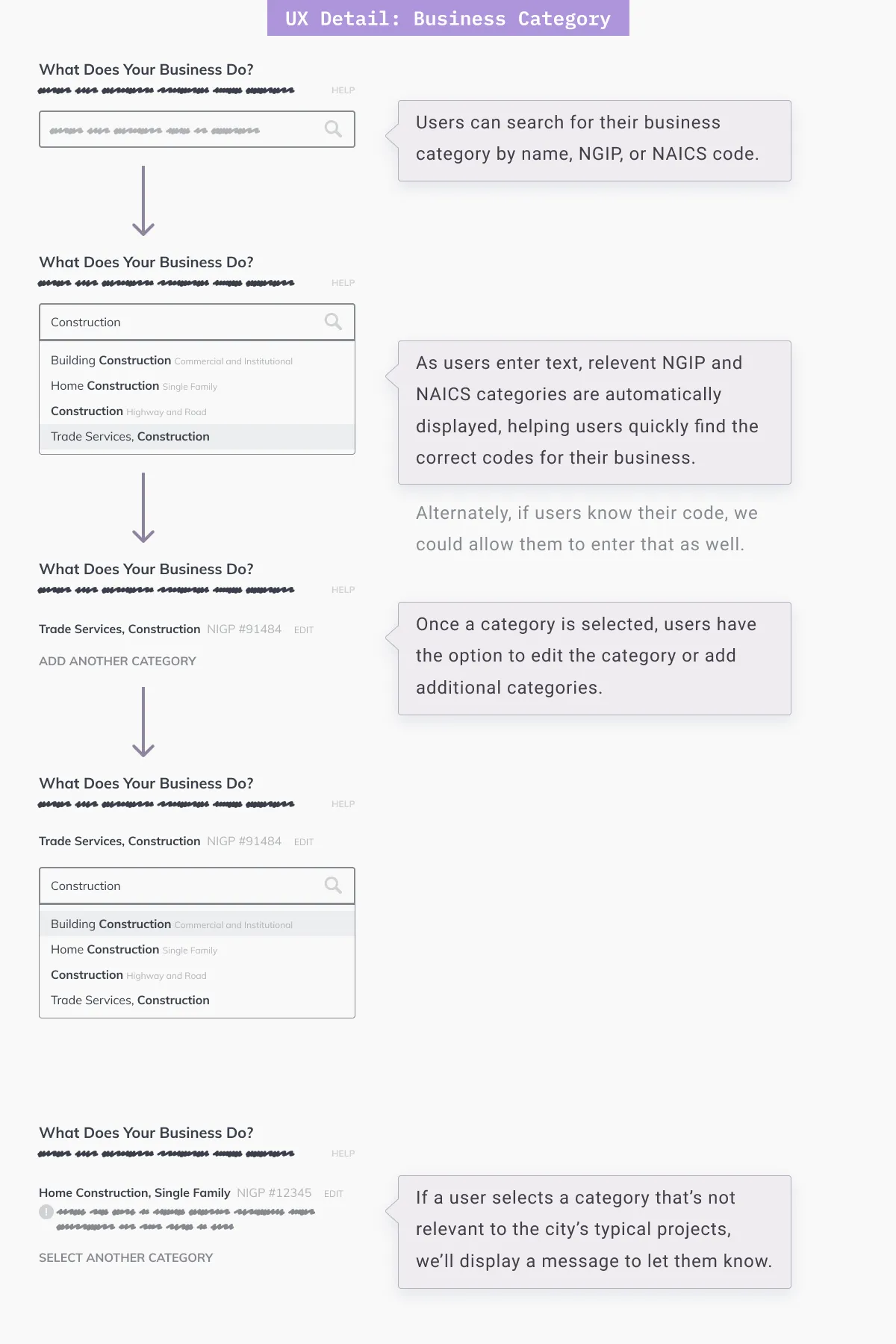
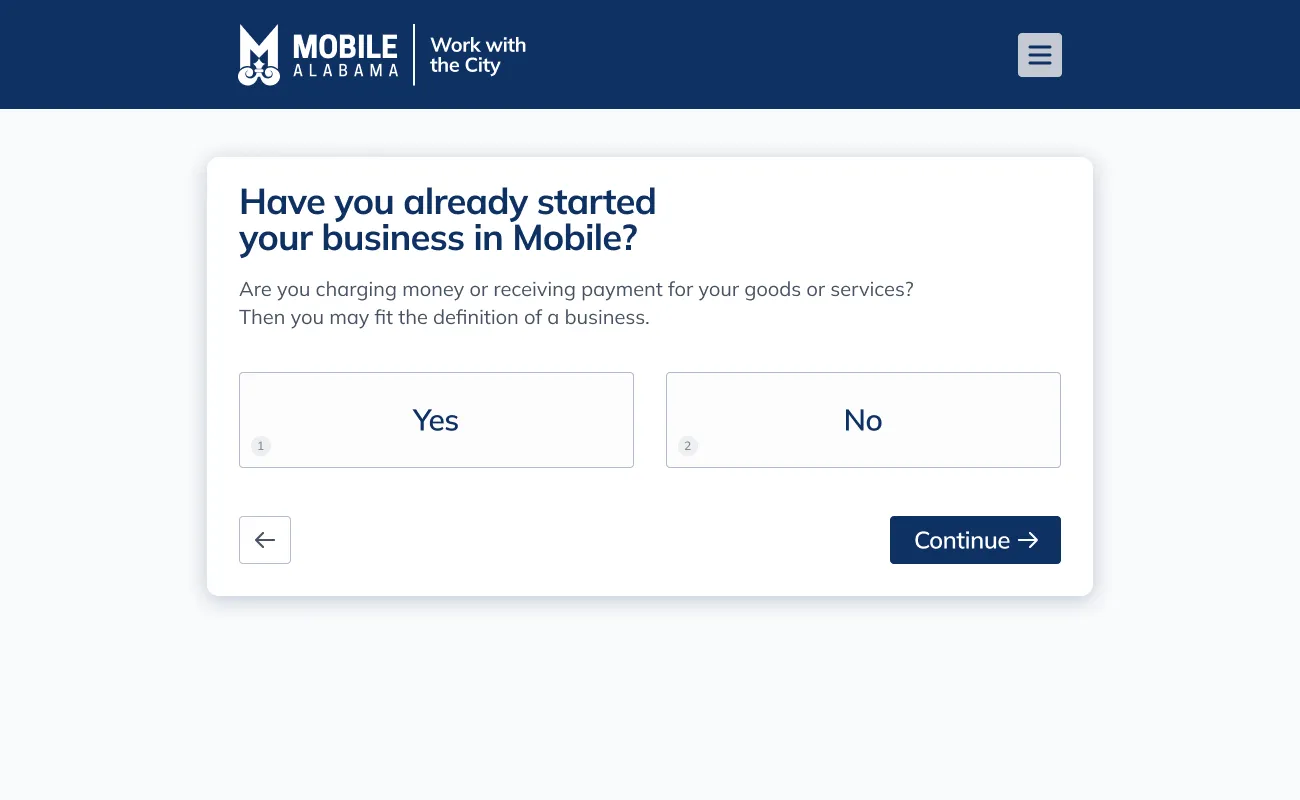
I designed the onboarding flow as a Q&A experience that could adapt to each user. At the end of the process, the data gathered populates the user profile.
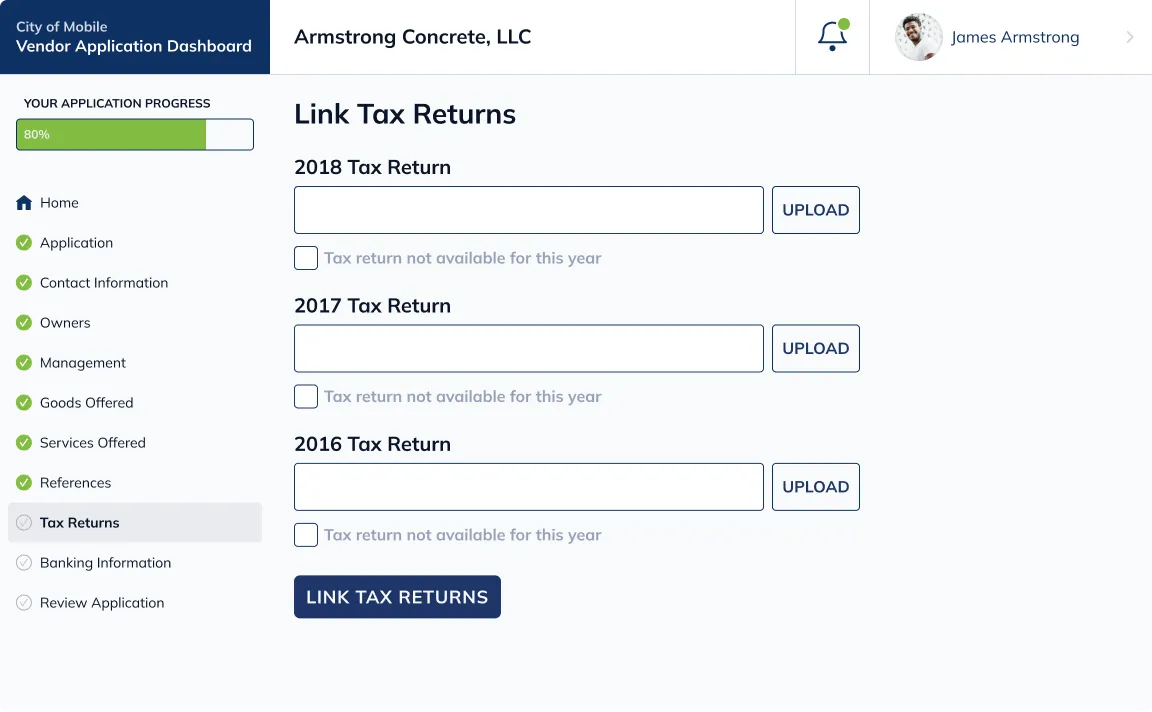
In their dashboard, users can quickly see what’s needed to complete their application and get help from city officials.
The onboarding flow
A prototype of the original flow, recreated with Claude Code.
Launch
Qwally launched the Work with Mobile portal in fall 2019: one place where small businesses could find out what they needed to work with the city, build a personalized checklist, and apply for certifications.
“Qwally may be the biggest single step in making the city the most business friendly we’ve ever taken.”
Sandy Stimpson, Mayor, City of Mobile, in Qwally’s 2020 case study
New vendors registered in the first year
Share of city contracts awarded to minority- and women-owned firms
Average time to complete onboarding
Assistance, replacing manual help from 8am to 5pm
Built to adapt
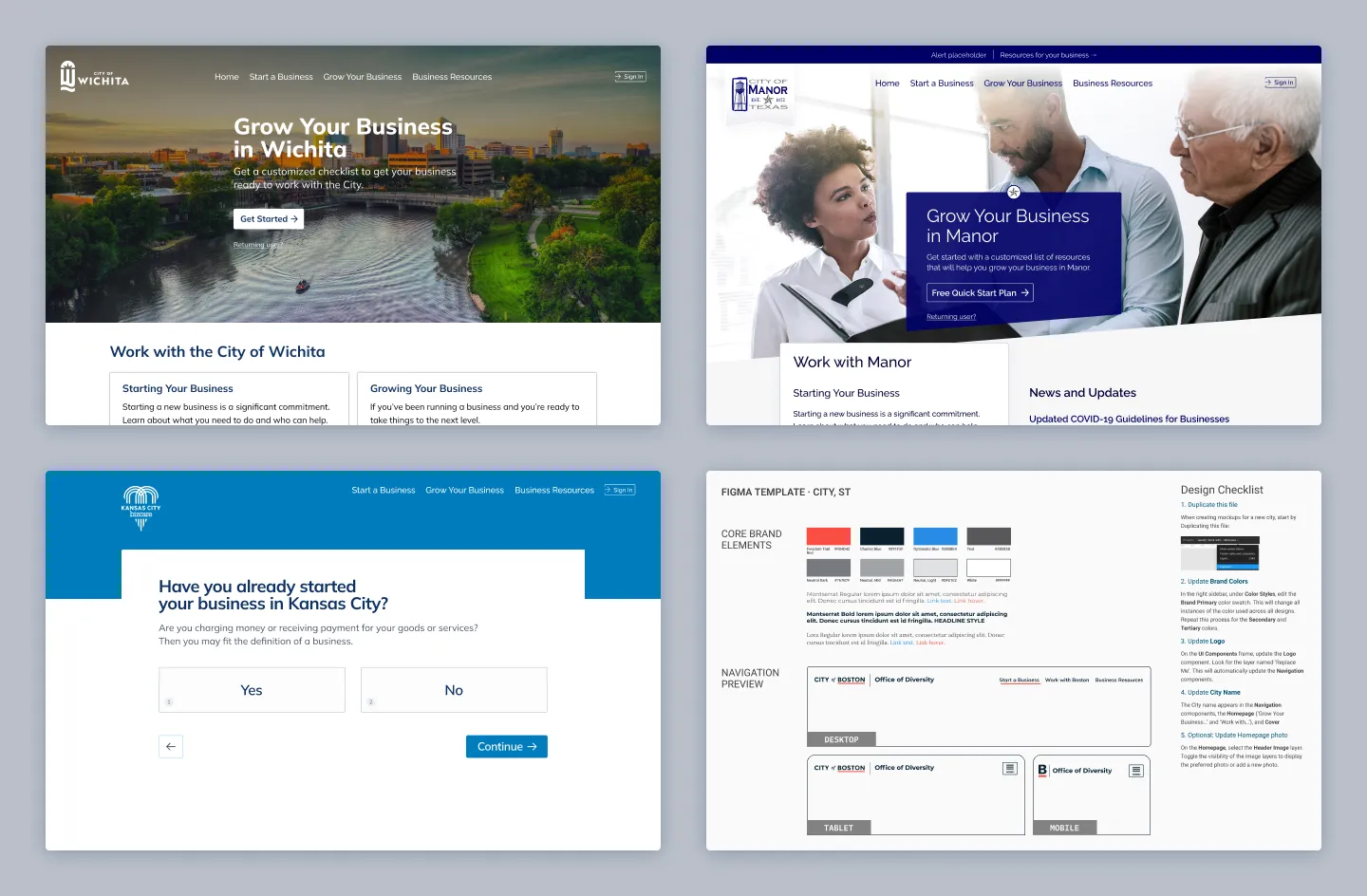
The brief’s goal was a product other local governments would adopt. I created a flexible design system for Mobile and a Figma library for Qwally, helping them adapt the system as they expanded to more cities.
Reflection
What I’d do differently
Make the design system hold up without me. While I was involved, my judgment filled the gaps during implementation. Since then, styles and accessibility have drifted on newer city sites. I’d build those decisions into the system before stepping away.
With today’s tools, I’d also put a coded prototype in front of city officials in the first week.
What I learned
My most useful early work wasn’t a screen. With no research budget, the UX coaching let the founders run three research cycles without me and return with valuable insights.
Complexity has to live somewhere. The regulations weren’t going to get simpler, so the job was to move the sorting from the business owner to the system.